Operator file · Lebanon
 Amber · recorded evidence
LeoVegas Review for Lebanese Users: Licence, Domain and Complaints
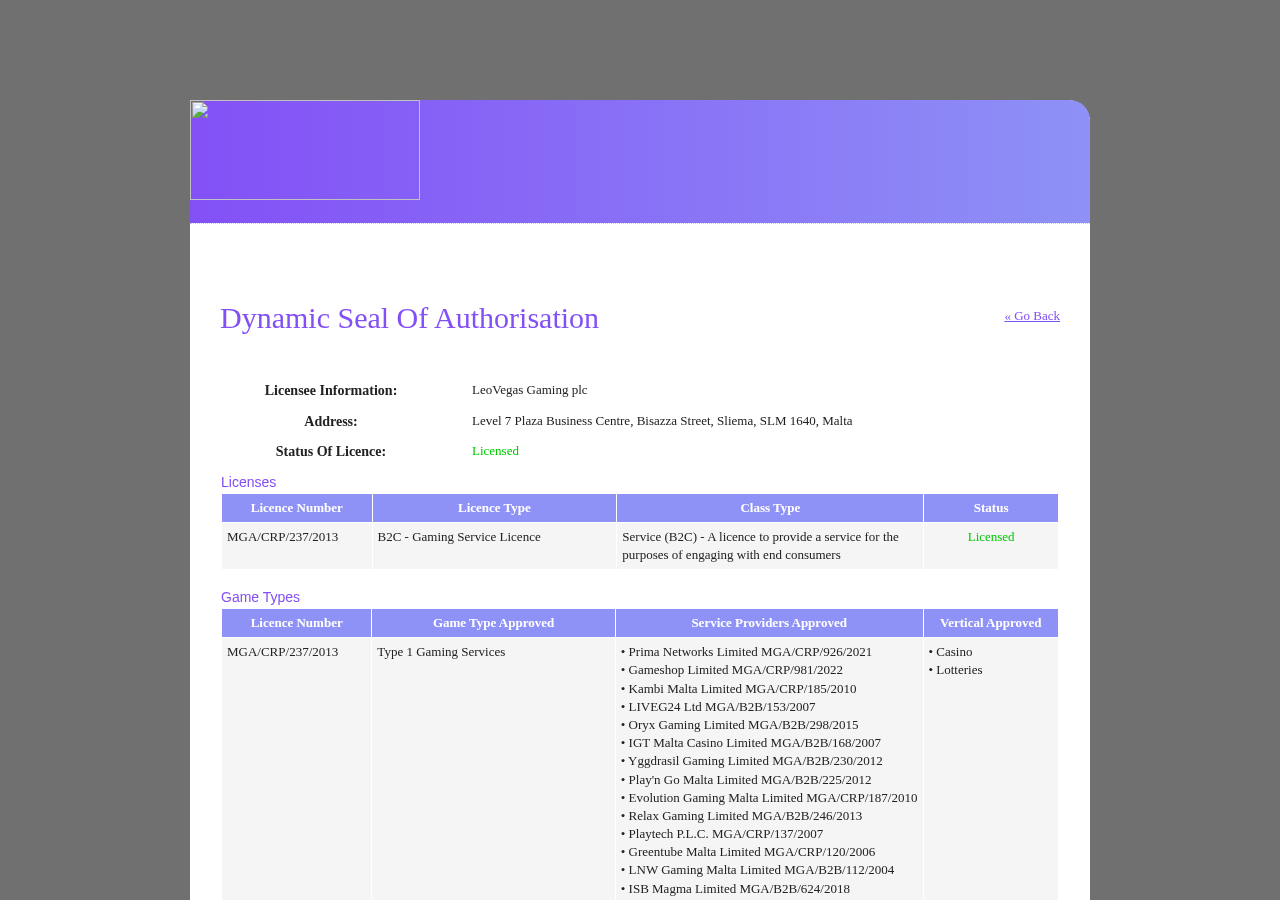
Evidence checked: 2026-09-14For a Lebanese user asking whether LeoVegas is legitimate, the clearest answer is qualified. A current Malta Gaming Authority record lists LeoVegas Gaming plc under licence MGA/CRP/237/2013 and includes https://www.leovegas.com among its website URLs. That is evidence of a documented foreign licence and an operator-domain relationship in the MGA record. It is not evidence of a Lebanese licence, local approval or guaranteed access to funds.
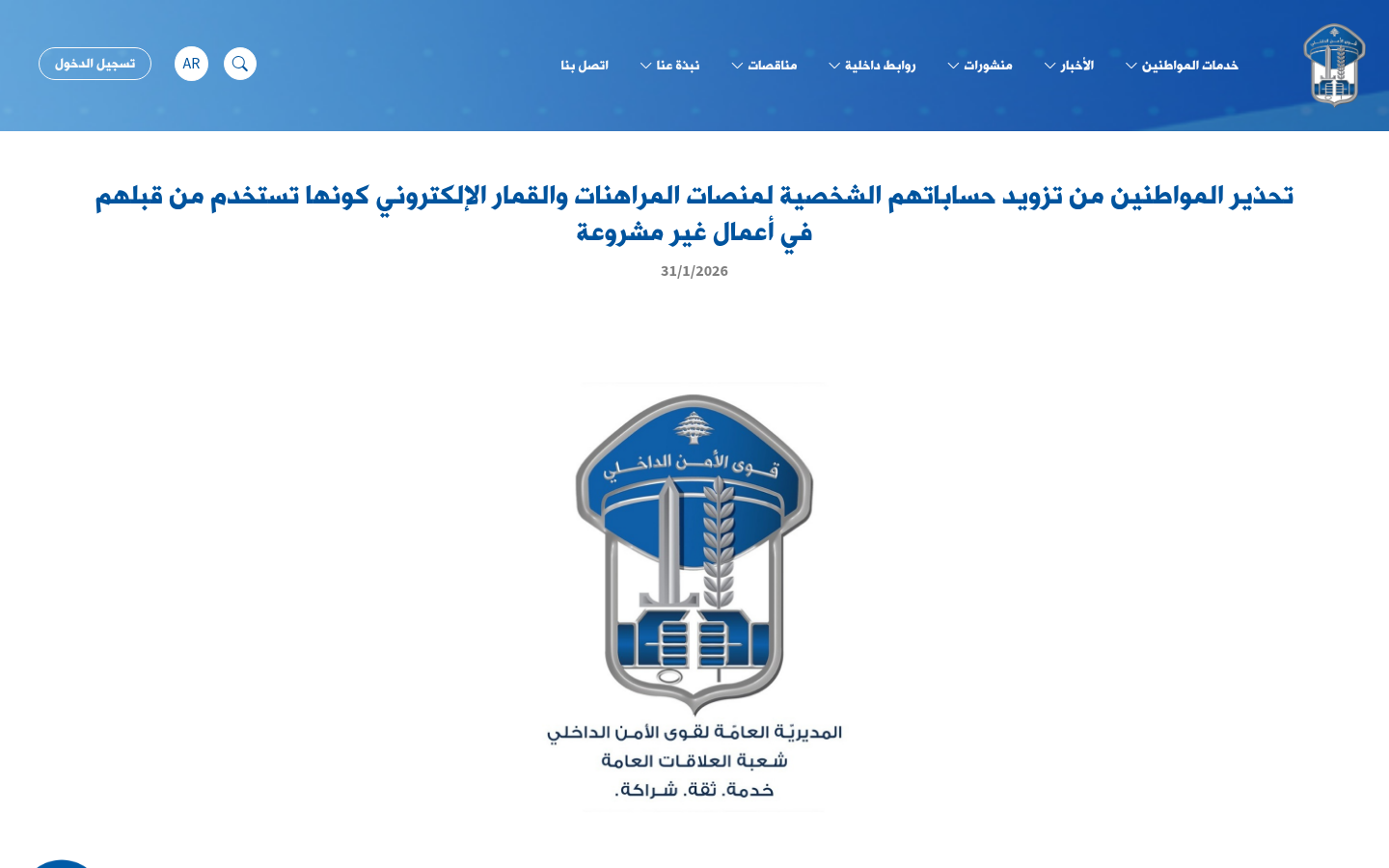
The operator’s published terms identify LeoVegas Gaming plc and the same MGA licence. They discuss KYC requirements, withdrawal procedures, possible payment-provider charges and an inactivity fee. A public complaint index displayed both resolved and unresolved user submissions about verification, account access, deposits and withdrawals at the time checked. The Internal Security Forces warning supplied for this review concerns illegal offshore betting platforms and requests for financial-account credentials; it does not name LeoVegas. The resulting assessment is amber because the licence record is documented but the wider evidence does not establish local authorisation or a uniformly positive user outcome.
What the available records establish
| Question | Record-based answer |
|---|---|
| Which entity is named? | LeoVegas Gaming plc. |
| Which licence is listed? | MGA/CRP/237/2013. |
| Which website URL appears in the MGA record? | https://www.leovegas.com. |
| What do the operator terms cover? | KYC, withdrawals, possible payment-provider charges and an inactivity fee. |
| What do user submissions cover? | Verification, account access, deposits and withdrawals. |
These records have different purposes. The MGA entry is the relevant primary licensing record. The terms are the operator’s own description of account and payment rules. The complaint index contains user submissions, so those entries indicate reported issues rather than findings that every complaint was valid or that LeoVegas caused each reported outcome. Keeping those categories separate is important when deciding what the evidence does and does not show.
Is LeoVegas licensed in Lebanon?
The supplied records document an MGA licence, not a Lebanese licence. They do not establish that a Lebanese authority has licensed LeoVegas or granted it permission to offer gambling services in Lebanon. The MGA record therefore answers a narrower question: it identifies a foreign regulator’s record for LeoVegas Gaming plc and the listed website URL. It does not answer every question about local legality, access or enforceability.
The supplied ISF warning gives relevant local caution. It identifies illegal offshore betting platforms and requests for financial-account credentials and points to the Balligh reporting route. The warning does not name LeoVegas. It should therefore not be presented as an adverse finding against this operator. It does, however, support careful checking of any offshore gambling website and any request for banking or account credentials.
For broader Lebanese context, see the legal status guide. The distinction to retain is simple: a foreign licence record is not the same thing as local authorisation. Where the available records do not answer a local-law question precisely, that question remains open rather than being resolved by the MGA entry.
How to verify the official LeoVegas domain
Domain checking should begin with the primary MGA record, not with a logo, advertisement or search result. The MGA verification page supplied for this review lists LeoVegas Gaming plc, licence MGA/CRP/237/2013 and https://www.leovegas.com among the website URLs. Compare the entity, licence number and domain carefully. A similar name or a different web address is not the same record.
- Open the MGA verification record directly and read the named entity and licence reference.
- Compare the address you intend to use with the website URL displayed in that record.
- Check that the page you reach uses the expected secure web connection and that the address is spelled correctly.
- Do not provide financial-account credentials in response to an unsolicited message or a page whose identity you have not checked.
- Save the verified address and retain a copy of the record checked on 10 September 2026.
The primary record is the strongest available check for the precise entity and domain combination. The operator’s own website terms can then be compared with the identity and licence information in the MGA entry. This process cannot establish that every advertisement, mobile link or support message using the LeoVegas name is genuine. It only helps compare a particular address with the domain listed in the regulator’s record.
| Check | What to compare | What it can show |
|---|---|---|
| Regulator record | Entity, licence and website URL | Whether the precise combination appears in the MGA entry. |
| Operator terms | Entity, licence and account rules | What the operator states about KYC, withdrawals and charges. |
| Unexpected request | Message, page address and requested credentials | Whether further caution or reporting is warranted. |
What the operator terms say about accounts and payments
The operator terms identify LeoVegas Gaming plc and licence MGA/CRP/237/2013. They include provisions concerning KYC requirements and withdrawal procedures. They also state that payment-provider charges may apply and describe an inactivity fee. These are operator statements and should be read as the terms’ description of the service, not as an independent confirmation that a payment will be accepted or completed in a particular case.
KYC means that account or transaction activity may involve identity checks. The available evidence does not specify a universal document list, a guaranteed review period or a guaranteed withdrawal time. It also does not provide a completed withdrawal test. Accordingly, no precise document checklist or processing estimate should be treated as established here.
Before making a payment, read the applicable terms and check the conditions shown for the account and payment method. Pay particular attention to withdrawal procedures, possible provider charges and inactivity provisions. Keep a copy of the version consulted and any confirmation received. The Lebanese payments guide provides wider information about payment-risk questions without changing the operator-specific evidence recorded here.
What the complaint record shows
The supplied complaint index displayed resolved and unresolved user submissions concerning verification, account access, deposits and withdrawals at check time. That is a signal about the topics users have raised on the index. It is not a finding that every submission was substantiated, and it does not establish the circumstances or outcome of every individual case.
| Reported topic on the index | How to interpret it | Evidence boundary |
|---|---|---|
| Verification | Users submitted complaints mentioning verification. | No general delay, cause or outcome is established. |
| Account access | Users submitted complaints mentioning access. | No particular account decision is verified here. |
| Deposits | Users submitted complaints mentioning deposits. | No payment method or acceptance result is established. |
| Withdrawals | Users submitted complaints mentioning withdrawals. | No completed withdrawal test or universal timeline is established. |
A resolved label on a complaint index should not be converted into a general promise that all disputes are resolved. An unresolved label should not be converted into a finding of wrongdoing. For a balanced assessment, compare any user report with account records, the relevant terms and the operator’s written response. Do not publish another person’s personal information when documenting a dispute.
What to do about an account or withdrawal dispute
Start by preserving a clear record. Keep transaction confirmations, relevant account messages, terms consulted, support correspondence and copies of documents submitted for KYC. Write a short chronology with dates, amounts and the question requiring an answer. Ask the operator to confirm the status of the account or transaction in writing and retain the reply.
The supplied operator terms describe withdrawal procedures, so quote the relevant provision when asking support to explain a decision. If payment-provider charges or an inactivity fee are relevant, ask which term applies and how the amount was calculated. Avoid sending credentials through an unverified message. Use the reporting guidance at complaints and cybercrime reporting if the issue involves suspected impersonation, credential requests or another possible cybercrime.
The available records do not establish a particular complaint deadline, approved mediator, guaranteed regulator remedy or outcome for a Lebanese claimant. Those points should be checked in the current terms and the relevant official channel before being relied upon. The evidence supports documenting the matter carefully, not promising that an escalation will recover funds.
Local cybercrime caution
The ISF warning supplied here identifies illegal offshore betting platforms and requests for financial-account credentials and refers to Balligh. It does not identify LeoVegas. Therefore, the warning should be used as general local safety guidance rather than as a claim that LeoVegas was the subject of that notice.
If a page or message asks for financial-account credentials and appears to impersonate a gambling operator, preserve the address, message and relevant timestamps. Do not expand the incident into an accusation without supporting records. Follow the applicable ISF reporting route and keep the report reference if one is provided. For a service disagreement, separately preserve the operator correspondence and transaction evidence.
Safer decision-making before payment
Three questions should be answered before a Lebanese user proceeds: does the exact domain appear in the MGA record, what do the current operator terms say about KYC and withdrawals, and what protections or remedies are actually available for the user’s location? The available evidence answers the first two only in part and does not establish a Lebanese licence or a successful withdrawal experience.
Set a personal limit before making any decision and do not treat a licence record as a guarantee of profit, payment or dispute resolution. If gambling is becoming difficult to control, consult the safer gambling resources. The evidence and evaluation methodology explains how licensing records, operator statements and user-context material are kept distinct.
Frequently Asked Questions
Is LeoVegas a scam or legitimate for a Lebanese user?
The MGA record lists LeoVegas Gaming plc under licence MGA/CRP/237/2013 and includes https://www.leovegas.com among its website URLs. That supports the existence of a documented foreign licence record. It does not establish Lebanese authorisation, a guaranteed payment or a guaranteed dispute outcome. The complaint index displayed both resolved and unresolved user submissions about verification, account access, deposits and withdrawals. Check the precise domain and read the current terms before deciding what to do.
Is LeoVegas legal or licensed in Lebanon?
The supplied records document an MGA licence, not a Lebanese licence. They do not establish that a Lebanese authority has licensed LeoVegas. The ISF warning concerns illegal offshore betting platforms and financial-account credential requests but does not name LeoVegas. A foreign licence should therefore not be described as Lebanese approval.
How can I verify the official LeoVegas domain and operator?
Use the MGA verification record and compare its named entity, licence MGA/CRP/237/2013 and listed website URL, https://www.leovegas.com, with the address you intend to use. Check the spelling of the domain and avoid unsolicited links or requests for financial-account credentials. The operator terms can then be compared with the identity and licence details in the MGA record.
What should I do if LeoVegas locks an account or delays verification or withdrawal?
Keep transaction records, account messages, terms and all support correspondence. Ask the operator for a written explanation and retain the response. The available evidence does not establish a universal processing time or a particular remedy. If the matter involves suspected impersonation or credential theft, use the complaints and cybercrime reporting guidance and preserve the relevant evidence.
How should Lebanese users document a complaint about LeoVegas?
Prepare a dated chronology and retain transaction confirmations, account messages, support correspondence, relevant terms and KYC submission records. Separate what happened from what you infer, and attach the operator’s written response where available. The complaint index shows that users have raised issues about verification, account access, deposits and withdrawals, but its entries do not independently establish every allegation or outcome.
authorisation.mga.org.mt · isf.gov.lb
Bottom line
LeoVegas Gaming plc is listed in the current MGA record under MGA/CRP/237/2013, with https://www.leovegas.com among the listed website URLs. Its terms identify the same entity and licence and discuss KYC, withdrawals, possible payment-provider charges and inactivity fees. User submissions show that verification, account access, deposits and withdrawals have been complaint topics. The ISF warning supplies general caution about offshore platforms and financial-account credentials but does not name LeoVegas.
That combination supports an amber assessment. Verify the exact domain against the MGA record, distinguish operator statements from user reports, read the applicable terms and preserve documentation before making a payment or raising a complaint.
Ready to verify and explore LeoVegas?
Compare the exact domain with the MGA record and review the terms before deciding.
Verify LeoVegas Domain